


Share this article


Accelerating security solutions for small businesses Tagore offers strategic services to small businesses. | A partnership that can scale Tagore prioritized finding a managed compliance partner with an established product, dedicated support team, and rapid release rate. | Standing out from competitors Tagore's partnership with Vanta enhances its strategic focus and deepens client value, creating differentiation in a competitive market. |
AI fluency and tokenmaxxing are the new corporate obsessions. But where leadership sees opportunity, security sees friction.
It’s no longer enough just to do your job well. Across industries, employees are expected to weave AI into every workflow so they can 10x productivity and innovation.
And when it comes to AI, today's workforce is single-minded. They're rising to the occasion to "use AI more" by seemingly any means necessary. They are seeking out new tools, signing up, and getting to work.
In the first drop from our new series, Trust Signals, we analyzed data from our 15,000+ customer base to find out how this aggressive pursuit of AI fluency is changing the makeup of the modern tech stack.
What we found is that AI mandates are creating a security nightmare: a rise in Shadow AI, where unmanaged, unapproved AI tools operate inside company environments without oversight.
The pressure to adopt AI, combined with frictionless onboarding for users, is causing a sudden increase in unsanctioned AI tools that exacerbate Shadow IT.
According to our internal data, 70% of companies have Shadow AI lurking in their environment. That means AI tools that weren’t brought in through proper procurement channels now have access to company data without oversight.
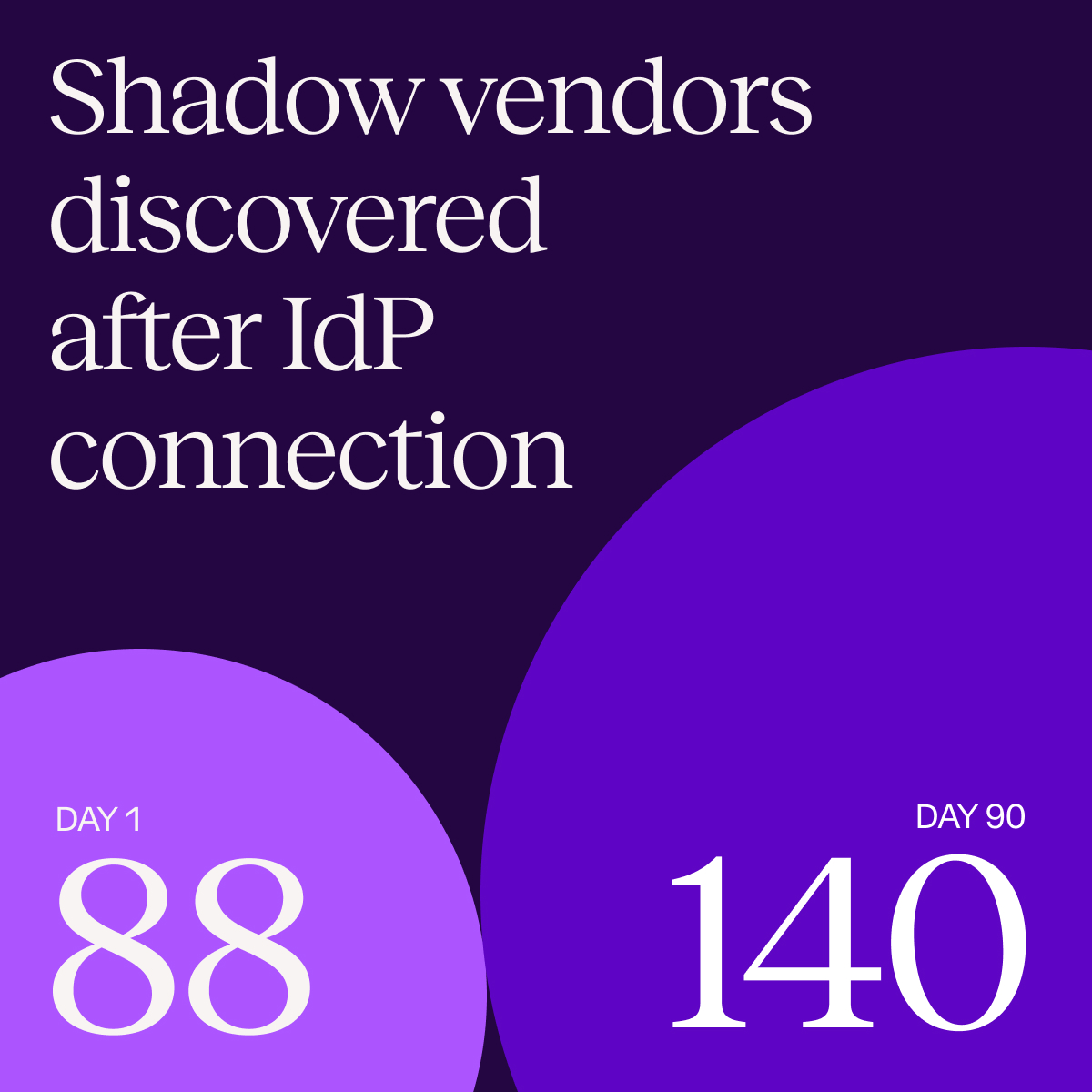
It’s contributing to a 36% year-over-year rise in overall Shadow IT. Our data also shows that organizations discover, on average, around 140 Shadow IT tools accessing their environment within 90 days of connecting to Vanta.
This pattern suggests that when employees face mounting pressure to get the job done, they won’t wait for security teams to approve new tools. When procurement is too slow, they’ll bypass it altogether.
Volume isn’t the only issue. In the environments we analyzed, AI pressure is creating a Shadow AI Whac-A-Mole phenomenon. When security teams intervene and revoke access to unmanaged tools, employees just reinstall them again and again.
We’re not talking about different tools. It’s the same tools that show a consistent remove-and-return pattern. Within a 30-day period, the average customer sees employees reinstall revoked tools 100+ times. Within one year, it happens 1,000 times.
This pattern is dependent on the security controls in place. But if reinstallation or alternate access paths are possible, employees will act.
This shows that Shadow AI isn’t a discovery failure. Demand is outpacing control. It's also a signal that acceptable use policies need sharper teeth, and that personnel need to understand the organizational risk they create when installing tools outside the proper procurement channels.
The most common Whac-A-Mole tools include some of the biggest names in AI. Anthropic, OpenAI, and Cursor all appear at the front of the pack. These are tools that are constantly making headlines for being beloved by users and fundamentally changing the way we work.
When productivity is tied to AI usage, removing key tools creates a gap employees feel immediately. So they close that gap themselves, knowingly skirting the rules for the sake of productivity and efficiency.
The issue is that AI tools often access a lot of data, which make them inherently riskier to an organization. Our data found that LLM vendors are 52% more likely to be designated as “high risk” versus traditional SaaS. The most common reasons cited are that LLMs touch sensitive company data, have access to IP/code, and are deemed essential to business operations.
Without IT defaults in place, usage could undermine company security and increase the risk of unauthorized access and data leakage.
AI fluency mandates have shifted behavior. They’ve created urgency and normalized experimentation. But they’ve also created a growing disconnect inside organizations. Leadership is pushing for widespread AI adoption, but the systems designed to manage risk can’t keep up.
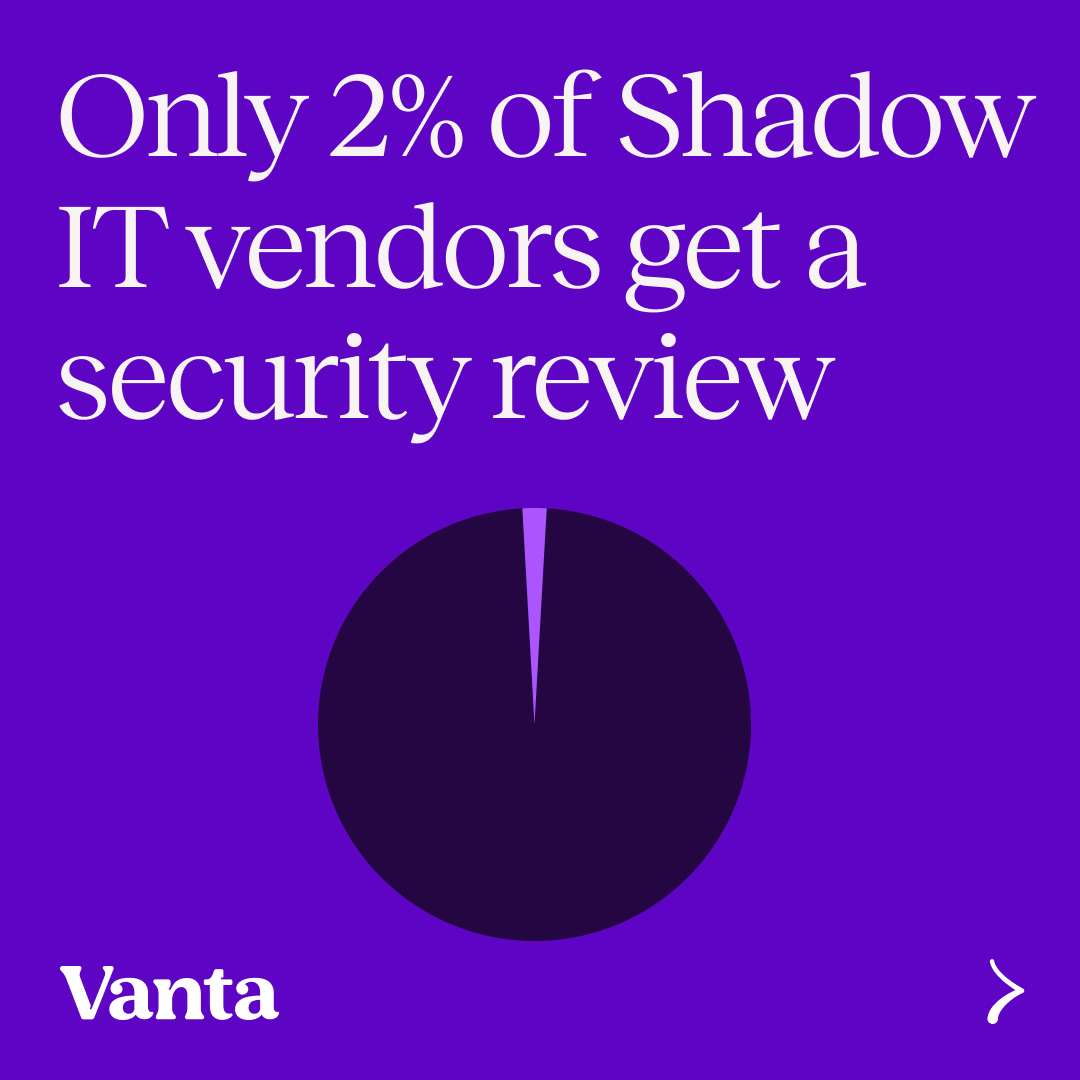
Our data shows that only 2% of Shadow IT vendors ever receive a security review. That creates a black hole, where tools remain unvetted while employees continue using them.
Traditional methods of controlling Shadow IT (revoking access) are no match for the pressure employees face to develop AI fluency and tokenmax their way to success. In a world where blocking tools doesn’t always stick, the answer isn’t to focus only on bolstering blocking techniques. Instead, leaders know they need to acknowledge the demand and meet it halfway. In practice, that means building a third-party review motion that’s fast, but rigorous and always rooted in risk.
It's a pattern with precedent: iPhones, Dropbox, and more recently, Granola all followed the same arc, where consumer adoption outpaced enterprise preferences, and the winners were tools brought inside the security perimeter, not blocked. The question for security leaders isn't how to stop adoption. It's how to secure it responsibly, and fast enough to keep up.
Optimizing your review process for speed, while keeping risk as the filter, gives organizations a fighting chance at getting proper oversight in place for tools employees will use regardless. The trick is to find a balance between reducing lag and maintaining standards.
A clear pattern has emerged: employees will use the tools they need to succeed, whether they’ve been approved or not. More than half (55%) of an organization’s vendor footprint is now Shadow IT, and pressure for AI fluency is driving that number up even higher.
Organizations that index too heavily toward blocking and removing will continue to play Whac-A-Mole with tools that keep re-emerging due to unwavering demand. Because right now, there’s a good chance that the tool you ban on Friday is already back in the mix by Monday.
To adapt, treat speed as a core security capability. Review faster, act with risk in mind, and close the gap between innovation and control with continuous monitoring. Security teams that optimize for speed will outpace the ones still trying to block their way out of this.
That’s exactly what Vanta’s Third Party Risk Management solution is built for. By connecting to your identity provider, Vanta automatically surfaces the vendors your employees are already using, and scores each one against your risk rubric before a human ever touches an assessment. New vendor requests flow in through a standardized vendor intake form or directly from procurement integrations like Zip, so nothing slips through the cracks. And because discovery runs continuously, your vendor inventory stays accurate between reviews, not just at audit time. The result is a program that moves at the speed of your business, not against it.
Methodology: The anonymized data used in this analysis comes from Vanta’s Third Party Risk Management solution, which identifies software usage, shadow IT, and associated risks across thousands of businesses from February 2024 through April 2026. By connecting to customers’ identity providers (SSO/IDP), we compare discovered vendor counts, security review rates, and risk levels across market segments, industries, and vendor categories, with a particular focus on AI tool adoption. Year-over-year comparisons use point-in-time snapshots from January 2025 and January 2026 for the same customer cohort to ensure consistency.

Learn how to scale, manage, and optimize alongside your business goals.
.png)
Watch this on-demand demo to learn how Vanta’s Vendor Risk Management solution automates and streamlines security reviews so that you can spend less time on repetitive work and more time strengthening your security posture.
.png)
Watch on-demand for a live demo that showcases Vanta’s Vendor Risk Management solution. Well share how we can help automate and streamline security reviews so that you can spend less time on repetitive work and more time strengthening your security posture.
.svg)
.svg)





.png)
.webp)




.png)
.png)
