If you’re a founder or engineering leader at a growing startup, you’re probably familiar with this tension: You need compliance like SOC 2 to close deals, but earning it pulls your team away from building your product.
For example, manual SOC 2 prep forces engineers to spend weeks collecting screenshots, tracking down documentation, and responding to auditors instead of shipping features. Meanwhile, point-in-time audits mean control gaps go unnoticed until late in the process, leading to rushed fixes and surprise findings.
The right compliance software eliminates this tension between speed and security by automating evidence collection, monitoring controls continuously, and keeping your audit documentation current as your infrastructure changes.
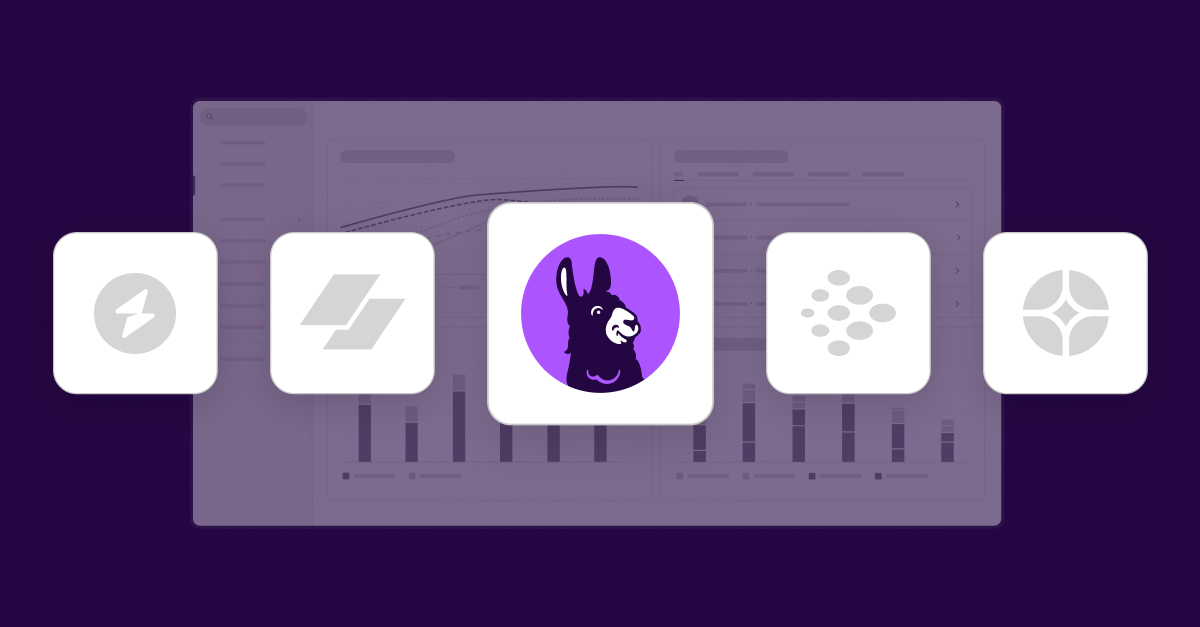
Below, we evaluate four leading SOC 2 compliance platforms to help you choose one that fits your tech stack, timeline, and growth trajectory.
- Vanta
- Drata
- Secureframe
- Sprinto
|
The state of SOC 2 compliance software in 2026
Companies are shifting from annual, point-in-time audits to continuous monitoring that proves security posture year-round. In fact, continuous monitoring services supplementing traditional point-in-time assessments grew 28% in 2024 as enterprise buyers demand real-time security validation. In other words, enterprise buyers now expect vendors to demonstrate active security controls at any moment, not just during scheduled audit windows.
Many teams still rely on manual evidence collection, forcing engineers to chase screenshots and exports because legacy tools don’t integrate with real workflows. These static approaches miss control failures until audit time, and as engineering environments evolve, documentation quickly drifts from reality.
Modern platforms solve these problems by integrating directly with your tech stack to validate security controls in real time. They support continuous monitoring, reuse evidence across multiple frameworks, and keep compliance synchronized with your actual infrastructure.
How we evaluated SOC 2 compliance tools
We reviewed leading platforms based on their ability to eliminate manual work, ensure accuracy, and fit teams without deep compliance expertise. Our evaluation weighted criteria toward capabilities that solve core SOC 2 challenges: removing manual evidence collection, enabling continuous audit readiness, and keeping pace with rapid business changes.
| Automation and Efficiency |
| Automated evidence collection breadth |
Reduces manual burden so teams focus on strategic work instead of gathering screenshots |
What percentage of SOC 2 evidence can you automatically collect? How many integrations do you offer? |
| Continuous monitoring |
Discovers compliance gaps before audits through real-time alerts when controls drift |
How frequently do you test controls? Do you provide real-time alerts when controls fall out of compliance? |
| Time to compliance |
Accelerates your ability to close enterprise deals by getting audit-ready faster |
What is the average time from onboarding to audit-ready status? Can you share customer timeline examples? |
| Audit preparation efficiency |
Ensures the right evidence is ready and creates smoother auditor collaboration |
How do you support audit readiness? How do you enable collaboration with auditors? |
| Integration breadth and depth |
Ensures comprehensive, automated evidence collection by connecting to existing tools |
How many integrations do you offer relevant to our tech stack? Can you provide custom integrations? |
| Framework Coverage and Flexibility |
| Multi-framework support |
Scales with your business as compliance needs expand beyond SOC 2 without duplicating work |
How many frameworks do you support? Can you show how evidence maps across frameworks? |
| Cross-framework mapping |
Eliminates collecting the same evidence multiple times when pursuing additional certifications |
What percentage of controls overlap between frameworks? How do you surface existing evidence? |
| AI and Intelligence |
| AI-powered evidence evaluation |
Validates evidence completeness and flags missing information before auditor review |
How does your AI evaluate evidence quality? Can you show examples of gap identification? |
| AI-generated remediation guidance |
Provides specific, actionable steps to fix failing tests quickly |
Do you provide AI-generated code fixes for failing tests? Can you show examples? |
| Automated policy generation |
Creates audit-ready policies tailored to your organization without requiring deep expertise |
Can you generate policies automatically based on our tech stack? How do you maintain policies? |
| Vendor and Risk Management |
| Vendor risk management |
Automates discovery, assessment, and monitoring of third-party vendors |
How do you help us identify and assess vendor risks? Do you offer continuous monitoring? |
| Risk assessment capabilities |
Identifies, prioritizes, and tracks risks across your organization |
Do you include risk assessment workflows? Can we customize risk scoring? |
| Customer Trust and Sales Enablement |
| Trust Center |
Allows prospects to self-serve compliance information, deflecting questionnaires |
What percentage of security reviews can be deflected? Can we customize with branding? |
| Support and Expertise |
| Expert guidance and support |
Provides in-product help and responsive support to ensure you meet audit deadlines |
What in-product tools guide us through compliance? What are your support response times? |
| Partner ecosystem |
Gives access to vetted service providers and auditors for implementation |
What service partners and auditors do you work with? How do partners integrate? |
Disclaimer: To help you find the best SOC 2 compliance software, we’ve researched and ranked a selection of leading platforms. While we may be biased about Vanta being the top option, we aim to provide a comprehensive view so you can choose the right fit for your organization.
The 4 best SOC 2 compliance software platforms
Each platform below is evaluated to help you understand real-world outcomes: speed to compliance, engineering hours saved, and ability to scale your trust program.
1. Vanta
Vanta is the Agentic Trust Platform that automates compliance, manages risk, and accelerates trust for more than 16,000 customers. Vanta delivers the fastest, most proven way to build a strong security foundation without creating unnecessary work.
Vanta's key differentiators include superior automation through the industry's broadest set of integrations, continuous monitoring that tests controls hourly, and an AI Agent that acts like your first full-time security expert. This proven credibility makes Vanta the name enterprise buyers expect to see.
Key features
- Automated evidence collection across cloud providers, identity providers, HR systems, and security tools for SOC 2 compliance
- Cross-mapped controls across more than 35 frameworks, like SOC 2, ISO 27001, and HIPAA
- More than 400 integrations and 1,400 tests across cloud, identity, endpoint, and ticketing
- Continuous controls monitoring with hourly testing and real-time alerts
- AI-powered policy generation and evidence evaluation
- Trust Centers that allow prospects to self-serve compliance documentation
- Vendor Risk Management with automated discovery and continuous monitoring
- Auditor collaboration portal with pre-scoped audit requirements
- Vanta AI for guided workflows (e.g., policy builder, control remediation) that keep you in the loop
Ideal for
Startups and scaling companies that need to achieve SOC 2 quickly, plus mid-market and enterprise organizations managing multi-framework compliance programs.
| Automation: Market-leading automation helps teams spend 82% less time per framework through hourly monitoring and AI workflows. |
Pricing: Enterprise-grade capabilities may come with premium pricing compared to basic alternatives. |
| Evidence collection: Strong cross-framework mapping lets you scale compliance efficiently as you add frameworks. |
Support: Teams seeking highly custom integrations may need additional implementation support. |
| Scalability: All-in-one platform manages compliance, risk, Trust Center, and vendor risk as you grow. |
Customization: Advanced features like adaptive scoping require configuration to match specific needs. |
{{cta_simple1="/cta-blocks"}}
2. Drata
Drata is a compliance automation platform with approximately 300 integrations that runs automated tests daily. It supports around 30 security frameworks with cross-mapped evidence and provides built-in auditor access to streamline SOC 2 audits.
When evaluating Drata, examine the depth of its integrations closely and assess support responsiveness to ensure it meets your team's needs.
Key features
- Automated evidence collection across cloud infrastructure and business systems
- Continuous monitoring with control status dashboards
- Policy templates and management tools
- Auditor collaboration features
- Multi-framework support, including SOC 2, ISO 27001, and HIPAA
Ideal for
Teams seeking automated SOC 2 workflows and exploring additional frameworks in the future.
| Evidence collection: Automated collection reduces some manual work associated with audit preparation. |
Integrations: Many integrations are basic access review connections that may lack depth. |
| Automation: Daily automated tests help maintain compliance between audit periods, though less frequently than some competitors' hourly monitoring. |
Automation: Significantly fewer automated tests compared to leading competitors (which offer 1,400+ tests) may require more manual evidence gathering. |
| Support: Strong customer support and onboarding help new users get started. |
AI features: Lacks an AI policy builder. AI-assisted test remediation is limited to custom tests only and does not cover pre-built tests. |
3. Secureframe
Secureframe is a compliance automation platform with more than 300 integrations that emphasizes intuitive design and multi-framework support. The platform runs daily automated tests and focuses on policy creation tools and streamlined onboarding to simplify compliance.
When considering Secureframe, evaluate the depth of its automation and breadth of integration coverage to ensure it can fully support your tech stack.
Key features
- Automated evidence collection with cloud and SaaS integrations
- Policy creation and management tools
- Personnel security features, including security awareness training
- Multi-framework support, including SOC 2, ISO 27001, HIPAA, and the PCI DSS
- Vendor management capabilities
Ideal for
Growth-stage companies balancing internal compliance, vendor oversight, and multi-framework needs.
| Advanced features: Quantitative risk assessment helps prioritize security efforts based on risk levels. |
Questionnaire automation: Former users have reported lower accuracy compared to competitors, which may require more manual review of AI-generated responses. |
| Scalability: Solid vendor risk capabilities support organizations as they scale third-party risk programs. |
Advanced features: Quantitative assessment is basic and requires meaningful manual input. |
| Audit workflows: The auditor portal allows audit creation and tracking, and provides a document repository. |
Fewer integrations: Offers a comparable number of integrations to Drata, but fewer than Vanta. |
4. Sprinto
Sprinto is a compliance automation platform with more than 300 integrations that focuses on helping startups tackle their first SOC 2 audit. The company runs tests every 4-12 hours, supports approximately 15 pre-built frameworks, and emphasizes guided compliance workflows with a strong presence in the startup market.
When evaluating Sprinto, consider its long-term scalability and automation depth to ensure it can continue meeting your needs as you grow.
Key features
- Automated evidence collection with cloud integrations
- Compliance workflow guidance for first-time audits
- Policy management tools
- Multi-framework support, including SOC 2, ISO 27001, and the GDPR
- Vendor management features
Ideal for
Price-sensitive startups pursuing their first SOC 2 audit who want guided workflows.
| First-audit guidance: Workflow design helps teams without compliance experience navigate requirements. |
Scalability questions: Evaluate whether platform capabilities can grow with expanding needs. |
| Startup focus: Positioning and pricing aligned with early-stage company needs and budgets. |
Automation depth: Some users report needing more manual evidence collection than deeper platforms. |
| Framework coverage: Supports common frameworks that startups encounter as they grow their business. |
Enterprise readiness: May require platform migration as organizations scale to enterprise programs. |
How to choose the right SOC 2 compliance software
Follow these steps to evaluate platforms based on your specific needs and ensure you select a solution that reduces burden while delivering a strong return on investment.
- Identify your compliance pain points and timeline. Determine if your primary driver is closing a specific deal, meeting investor requirements, or building long-term infrastructure.
- Map your tech stack and integration requirements. List your cloud providers, identity systems, HR platforms, and security tools to evaluate which platforms offer deep, automated integrations that match your tech stack.
- Evaluate continuous monitoring capabilities. Ask vendors how frequently they test controls and whether they provide real-time alerts.
- Assess multi-framework scalability. Consider whether you will need ISO 27001, HIPAA, or other frameworks as you grow.
- Run live trials with real data connections to assess your SOC 2 readiness. Connect your actual systems during evaluation to test whether evidence collection truly automates. Review the audit readiness checklist to ensure you're covering all preparation requirements.
- Evaluate audit workflows and auditor collaboration. Ask how the platform facilitates auditor access to evidence and whether it includes pre-scoped audit requirements.
- Model total cost, including time investment. Consider subscription pricing as well as engineering hours required for setup, ongoing maintenance, and audit preparation.
Automate SOC 2 compliance and accelerate trust with Vanta
SOC 2 compliance has evolved from a point-in-time checkbox to a continuous foundation for building customer trust. The right platform eliminates manual evidence collection, keeps security controls healthy between audits, and scales as compliance needs grow.
Vanta is built for this reality. With superior automation, continuous monitoring, and AI-powered workflows, Vanta helps organizations get audit-ready in weeks and stay ready as they scale.
Request a demo to see how Vanta can accelerate your path to SOC 2 compliance.
Frequently asked questions about SOC 2 compliance software
What is SOC 2 compliance software?
SOC 2 compliance software automates achieving and maintaining SOC 2 certification by connecting to your cloud infrastructure, identity providers, and other systems to continuously collect evidence and monitor controls. It replaces manual work with automated validation against the Trust Service Criteria developed by the American Institute of Certified Public Accountants (AICPA).
How long does it take to achieve SOC 2 compliance with automation software?
The timeline to achieve SOC 2 compliance with automation software depends on your starting security posture, but automation platforms reduce time to audit-ready status from months to weeks by eliminating manual evidence collection and providing guided workflows.
Can SOC 2 compliance software support multiple frameworks like ISO 27001 and HIPAA?
Yes. Leading SOC 2 compliance software can support multiple frameworks through cross-framework mapping, which allows evidence collected for SOC 2 to automatically apply to ISO 27001, HIPAA, and other frameworks. This eliminates the need to collect the same evidence multiple times and makes expanding your compliance program efficient.
What is the difference between continuous compliance and point-in-time SOC 2 audits?
Continuous compliance platforms monitor controls on an ongoing basis—often hourly or daily—while point-in-time audits evaluate security controls at a single moment. Continuous compliance ensures you discover and address issues before they become audit findings.
How does SOC 2 compliance software reduce audit preparation time?
Automation platforms connect to your systems to collect evidence continuously, maintain organized audit trails, and provide auditor collaboration portals. This replaces the manual scramble of gathering screenshots and documentation before each audit.



.svg)
.svg)




.webp)