


Share this article


Accelerating security solutions for small businesses Tagore offers strategic services to small businesses. | A partnership that can scale Tagore prioritized finding a managed compliance partner with an established product, dedicated support team, and rapid release rate. | Standing out from competitors Tagore's partnership with Vanta enhances its strategic focus and deepens client value, creating differentiation in a competitive market. |
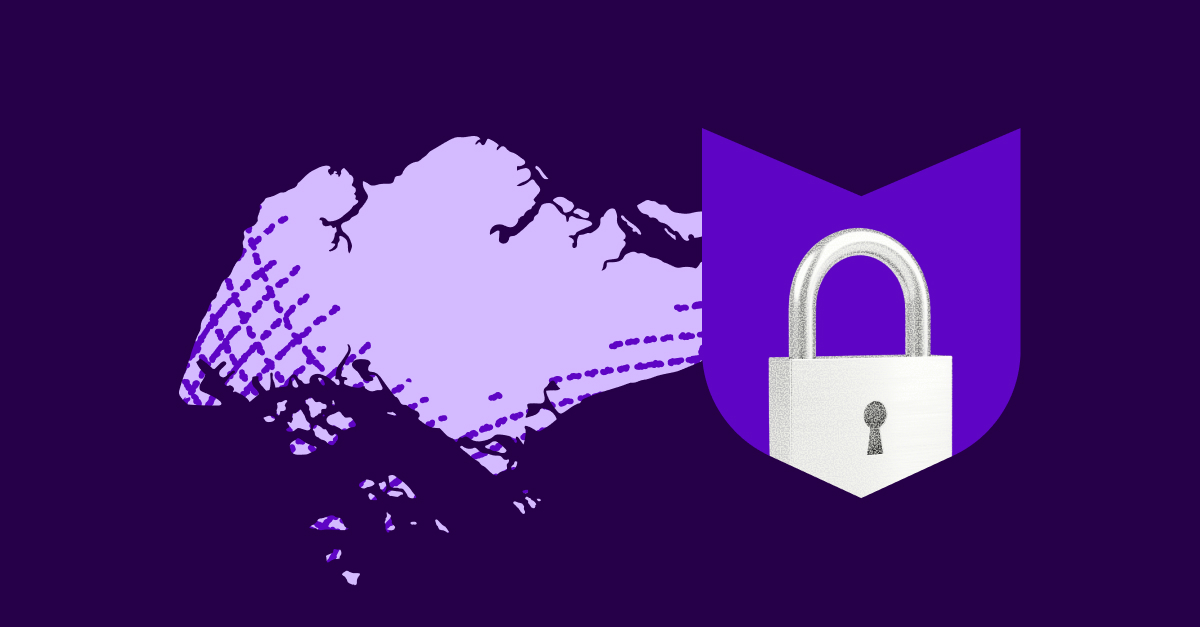
Singapore is one of Asia-Pacific’s most mature and regulated markets, particularly in financial services. If you plan to operate or expand into Singapore, you need to scope the country’s many prescriptive compliance requirements that may apply to your business.
One advantage organizations may have is that many Singapore-specific frameworks map to international standards. If you already have a foundation for security and privacy compliance, you often won’t have to start from scratch. This guide discusses the core Singapore compliance frameworks and the requirements that apply to your business based on your industry and customer base.
Compliance in Singapore is primarily driven by government regulators and industry bodies that develop, enforce, and promote different security, privacy, and assurance requirements. The following are some main bodies that oversee the country's core compliance frameworks and regulations:
{{cta_withimage12="/cta-blocks"}} | Starting compliance ebook
Singapore’s compliance environment is built on five central frameworks and regulations:
The PDPA is Singapore’s primary data privacy legislation that governs how organizations collect, use, disclose, and protect personal data. It covers similar themes to the EU’s GDPR and Australia’s Privacy Principles, although the laws differ in scope and specific obligations. The PDPA balances individuals’ rights to protect their personal information with organizations’ legitimate needs to use that data for business.
The Act is enforced by the Personal Data Protection Commission and applies to most private-sector organizations that handle personal information (whether electronic or non-electronic) in Singapore. The Commission has broad enforcement powers, and non-compliance can lead to substantial financial penalties of up to S$1 million or 10% of an organization’s annual Singapore turnover if that turnover exceeds S$10 million, whichever is higher, as well as other enforcement action.
To align with the Act, you need to implement measures such as consent management and data-handling processes, data governance and protection practices, data retention controls, and breach notification workflows.
{{cta_withimage14="/cta-blocks"}} | GDPR compliance checklist
MAS TRM is a set of guidelines issued by the Monetary Authority of Singapore to guide financial institutions with technology and cybersecurity risk management. It focuses on third-party risk management, cyber resilience, governance, and incident response for in-scope entities.
The MAS supervises compliance with the TRM Guidelines as part of its prudential oversight of financial institutions. The framework applies to all MAS-regulated financial institutions, including banks, insurers, central securities depositories, and financial advisers, with criteria depending on the entity’s size, nature, and complexity of operations.
While the TRM Guidelines themselves are not legislation, MAS can take supervisory or enforcement action where regulated entities fail to meet the applicable criteria. Depending on the circumstances, enforcement action can result in formal directions for corrective action, composition penalties, prohibition orders, or licence revocation.
These expectations are reinforced by legally binding MAS Notices. The Notice on Technology Risk Management sets hard requirements, including the one-hour incident notification, while the Cyber Hygiene Notice mandates baseline controls such as MFA, patching, and privileged access management for all regulated entities.
MAS TRM’s objectives overlap with other frameworks, such as ISO 27001, in governance, risk assessment, access control, and incident management. That said, MAS TRM can be substantially more prescriptive. In practice, one of the most important differences for MAS-regulated entities is the speed of incident reporting.
"Most international organizations arrive in Singapore with a mature incident response program and assume it travels. It does not, at least not for MAS-regulated entities. The one-hour notification requirement catches teams every time. Not one business day or four hours—but one hour from the moment you become aware of a relevant incident, before root cause, before containment is confirmed, before your legal team has finished reading the notification draft.
Organizations miss it not because they lack a plan, but because their plan was built around a different clock, and by the time they realize Singapore runs faster, the window has already closed.”

MAS TRM requirements can also intersect with other compliance obligations: critical infrastructure entities may have additional incident reporting requirements under the Cybersecurity Act, while OSPAR extends relevant TRM expectations to outsourced service providers.
The Cybersecurity Act is Singapore’s primary cybersecurity legislation that focuses on operational resilience and protection of critical infrastructure. It establishes cybersecurity requirements for organizations operating Critical Information Infrastructure (CII), ensuring essential services can withstand, respond to, and recover from cyber incidents.
The Act is enforced by the Cyber Security Agency (CSA) of Singapore, and applies to organizations that handle CII across 11 sectors:
Compliance with the Cybersecurity Act is mandatory for designated CII owners and other in-scope entities. Organizations that fail to meet regulatory expectations may face financial penalties, regulatory intervention, and other enforcement action.
The Cybersecurity Act overlaps with ISO 27001’s risk management and incident response controls. For entities in the banking and financial sectors, obligations overlap with MAS TRM, and where cardholder data is involved, PCI DSS, though the Act itself doesn’t impose card payment-specific requirements.
Note: The Cybersecurity (Amendment) Act 2024 expands Singapore’s cybersecurity requirements. Its first tranche took effect on October 31, 2025, updating CII requirements and expanding incident-reporting obligations. The amendments also introduce a new Foundational Digital Infrastructure (FDI) regime for major service providers, such as cloud platforms and data centers, to be implemented in phases.
OSPAR is a standardized assurance report and audit framework used by service providers to demonstrate that their controls meet the security and risk management expectations of financial institutions. It was developed under the Association of Banks in Singapore (ABS) Guidelines on Control Objectives and Procedures for Outsourced Service Providers to provide a consistent baseline for assessing outsourced service providers’ controls.
Many MAS-regulated financial institutions expect material outsourced service providers to provide an OSPAR attestation or equivalent independent assurance as part of vendor due diligence processes. While OSPAR compliance isn’t a legal requirement, it’s become a widely expected best practice for organizations providing services to the financial sector.
Unlike legislation like MAS TRM and the PDPA, OSPAR doesn’t prescribe financial penalties or enforcement action for non-compliance. Still, organizations that can’t provide an OSPAR attestation or comparable compliance evidence may face increased scrutiny during procurement.
MTCS is a cloud security standard that defines cloud security requirements and best practices across three tiers of cloud service risk and criticality. The standard gives cloud service providers (CSPs) a consistent mechanism to demonstrate their security posture to customers, especially those in regulated industries evaluating cloud adoption.
MTCS aligns with ISO 27001 and includes additional requirements for data sovereignty, virtualization security, and multi-tenancy. The certification process is also similar to ISO 27001, although organizations can pursue one of three tiers depending on the sensitivity of the data and workloads they support:
Compliance with MTCS is voluntary for most CSPs, except those participating in cloud service bulk tenders for Government procurement of public cloud services. There are no penalties for non-compliance, but failing to meet the criteria may result in disqualification from government tenders.
In addition to ISO 27001, the framework intersects with OSPAR and MAS TRM for CSPs serving the financial sector.
{{cta_withimage2="/cta-blocks"}} | ISO 27001 checklist
Singapore-specific regulatory requirements often overlap with notable international security standards and legislations. This gives you the opportunity to reuse existing implementations to accelerate compliance in the country.
The most notable overlaps include:
An effective way to approach the overlaps is to leverage a leading GRC platform that supports cross-mapping. For example, access management controls can simultaneously address ISO 27001 Annex A controls, satisfy MAS TRM expectations around privileged access, and support PDPA personal data protection obligations.
Without this visibility, teams will often build and evidence the same controls three separate times. When teams can see where requirements overlap, they can reuse existing work instead of duplicating it, saving significant time and resources as they add frameworks.
Your Singapore compliance stack will depend on your industry and intended customer base. The table below outlines common examples:
What separates companies that close deals quickly from those that stall in procurement is not whether they have the right certifications, but whether their compliance evidence is organized well enough to produce on demand. Most early-stage SaaS companies underestimate how much this can affect the sales cycle.
“The fastest path to commercial credibility in Singapore isn’t a specific framework. It’s whether you can answer vendor security questionnaires without losing three weeks of your team’s time.
Enterprise buyers in Singapore, especially MAS-regulated ones, conduct thorough due diligence. ISO 27001 can get you through much of it because it maps cleanly to what their security teams are actually checking. SOC 2 helps if your buyer base is international, while PDPA compliance is assumed, not optional.”
Maintaining compliance and managing your evidence across multiple frameworks becomes time-consuming with each new framework. Transition to using top compliance management platforms like Vanta to support compliance efforts with automated evidence collection, cross-mapping that streamlines evidence reuse, and real-time oversight for proactive gap management.
Vanta is the #1 agentic trust platform that helps you build a strong compliance foundation using workflow automation, ongoing oversight and risk management, and built-in resources like templates and AI-powered questionnaire answers.
Vanta natively supports 35+ frameworks, including ISO 27001, SOC 2, GDPR, PCI DSS, and ISO 42001—the international frameworks underpinning Singapore compliance programs. OSPAR has a strong ISO 27001 overlap, while you can address MAS TRM and other Singapore-specific requirements by building a custom framework on the platform.
Vanta’s ISO 27001 product gives you a structured foundation to start your compliance work with features, such as:
If you’re pursuing frameworks with a focus on service provider risks, Vanta’s vendor risk management suite can help you with AI-driven security reviews and real-time oversight.
Schedule a custom demo to see which Vanta solutions can support you the best.
{{cta_simple4="/cta-blocks"}} | GRC demo
Vanta is not a law firm, and this article does not constitute or contain legal advice or create an attorney-client relationship. When determining your obligations and compliance with respect to relevant laws and regulations, you should consult a licensed attorney.

Learn how to scale, manage, and optimize alongside your business goals.
.svg)
.svg)





.jpg)
%20(1).png)


.png)

