Accelerating security solutions for small businesses
Tagore offers strategic services to small businesses.
A partnership that can scale
Tagore prioritized finding a managed compliance partner with an established product, dedicated support team, and rapid release rate.
Standing out from competitors
Tagore's partnership with Vanta enhances its strategic focus and deepens client value, creating differentiation in a competitive market.
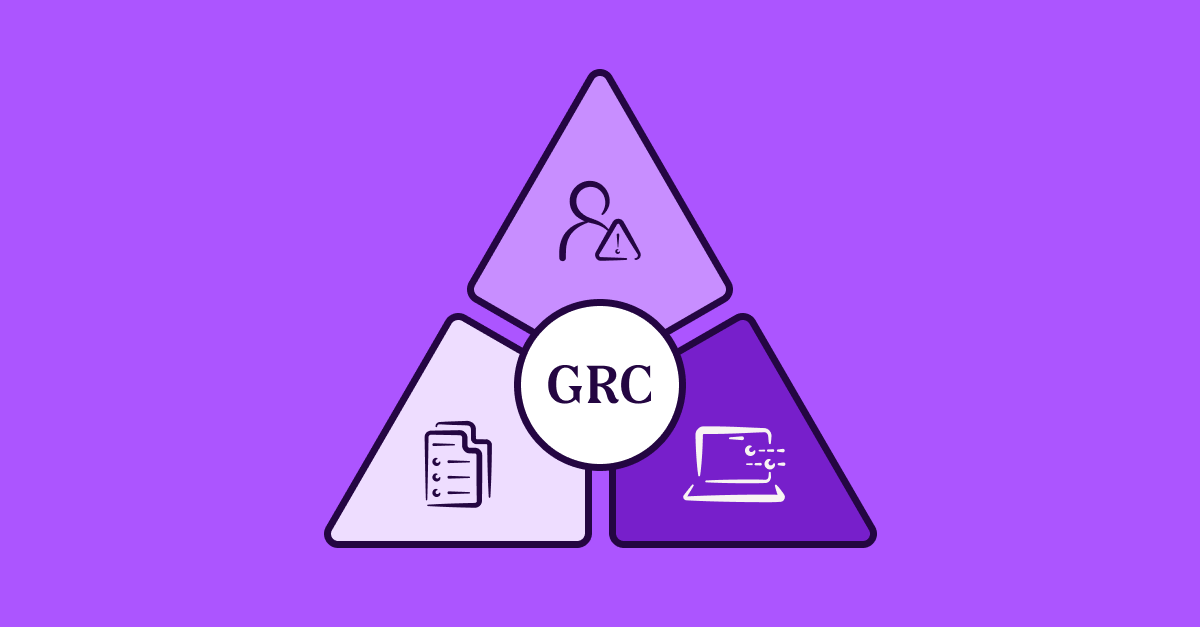
Governance, risk, and compliance (GRC) software gives you one place to manage compliance frameworks, test security controls, track risk, and produce audit evidence. The category has moved well past document storage. Modern platforms test controls continuously, flag failures as they happen, and keep your program audit-ready between assessments instead of triggering a scramble every twelve months. That shift is why the platform you pick determines how much of your program runs on its own and how much still lands on your team.
Three things make the 2026 decision harder than it was a few years ago. Regulatory requirements keep overlapping, so teams running SOC 2 and ISO 27001 together want cross-mapped controls rather than duplicate work. AI governance moved from theory into procurement, with ISO 42001, the EU AI Act, and NIST AI RMF turning up in enterprise security reviews. And tool sprawl has become its own risk, since separate products for compliance, risk, vendor reviews, and questionnaires create exactly the blind spots a GRC program exists to close.
Feature lists won't settle the decision for you. Every vendor in this category claims automation, deep integrations, and AI, so the real differences show up in depth, how much evidence gets collected without anyone touching it, how often controls run, how far integrations reach into your stack, and whether the platform still works when you add your second or third framework. In this article, you'll get a breakdown of five leading GRC platforms for 2026, including their key features, strengths, drawbacks, and the kind of organization each one fits best, along with the criteria worth bringing to your own vendor conversations.
Top 5: Best GRC software
Vanta
Optro, formerly Auditboard
Secureframe
Onetrust
Centraleyes
Understanding the GRC market
GRC software helps organizations navigate the increasingly complex web of regulatory requirements, risk exposure, and internal policies—ensuring operations stay secure and compliant. The right platform drives efficiency, supports better decision-making, keeps audits on track, avoids costly penalties, builds customer trust, and accelerates revenue growth.
Key drivers shaping the GRC landscape:
Evolving regulatory complexity: Regulatory requirements are increasing and overlapping requirements are driving demand for automation, streamlined evidence collection, and audit fatigue reduction
Real-time risk management: Static tools fall short—continuous monitoring and integrated systems are now table stakes for staying ahead of risk
Heightened security exposure: AI-powered threats and internal adoption are pushing organizations to embed compliance earlier in development and security workflows
Tool and vendor sprawl: Disconnected tools create inefficiencies and risk blind spots, making consolidation key as leaders seek ROI and tighter control over third-party risk
Board-level accountability: GRC teams must surface real-time insights and quantifiable metrics to inform executive decision-making
Early AI adoption: Early adopters are gaining an edge through AI-driven automation, faster analysis, and smarter risk mitigation
Rise of GRC engineering: 21.5% of organizations with 5,000+ employees have already embedded dedicated GRC engineers, signaling a shift from generalist oversight to specialized AI-risk roles.
Criteria to consider from a GRC solution
We evaluated GRC platforms across a range of criteria focused on automation, flexibility, and enterprise readiness to identify solutions that best support scalable, efficient, and user-friendly compliance programs.
Here are some of the features and functionalities you should consider when selecting a GRC compliance software:
Criterion
Why it matters
Questions to ask vendors
Framework & program coverage
Framework coverage & flexibility
A rigid template forces your program to bend
How many frameworks ship natively, and can you scope them per our program?
Custom frameworks & controls
Industry/internal needs don't fit standards
Can we create custom frameworks and map our own controls?
AI-governance framework coverage
AI governance is the 2026 frontier
Do you support ISO 42001, the EU AI Act, and NIST AI RMF?
Automation & monitoring
Automation & workflow efficiency
Manual GRC doesn't scale
How much of the GRC workflow is automated vs manual?
Continuous control monitoring
Storing evidence ≠ continuously testing it
How frequently are controls tested, and what triggers on failure?
Evidence automation
Manual evidence collection wastes hours
What % of evidence is auto-collected?
Risk & audit
Security & risk management
Disconnected risk lists can't be reported as posture
Does internal and third-party risk live in one place, tied to controls?
Audit management
Audits stall without in-platform workflows
What audit workflows and auditor access do you provide?
Issue management & remediation
Findings need owned closure
How are issues tracked, owned, and closed?
Integration & infrastructure
Integrations & ecosystem fit
GRC is only as accurate as its data
How many integrations, and how deep into our stack?
API & extensibility
Push/pull with your systems
What does your API support beyond file upload?
Reporting & governance
Reporting & dashboards
Stakeholders need audience-specific views
What dashboards ship out of the box, and how customizable?
Enterprise readiness
Global orgs need multi-entity structure
Do you support org units/workspaces for multi-entity, multi-framework?
Board- & regulator-ready reporting
Leadership wants current, defensible posture
Can you produce board- and audit-ready reporting on demand?
AI & experience
AI-driven intelligence
"AI" that autocompletes ≠ AI that acts
Does your AI act (map, draft, remediate) — with human oversight?
Usability & customization
Low adoption kills GRC ROI
How configurable is it to our terminology and workflows?
Customer support & expertise
Programs benefit from in-house GRC expertise
What are your support SLAs, and do we get access to GRC experts?
Disclaimer: To help you find the best GRC solution, we've researched and ranked a selection of leading platforms. While we may be biased about Vanta being the top option, we aim to provide you with a comprehensive understanding of the available options, so you can choose the right fit for your organization.
The best GRC software teams should know about in 2026
Here are our top picks and a comprehensive breakdown of their features, pros and cons to help you choose the right fit for your organization.
1. Vanta
Vanta is a leading trust management and compliance automation platform, built to simplify and accelerate compliance. By automating the most time-consuming aspects of security audits, Vanta helps organizations quickly achieve and maintain compliance with critical frameworks like SOC 2, ISO 27001, HIPAA, and more. It continuously monitors your systems in real time—so you’re always audit-ready and in control of your security posture.
Trusted by over 16,000 companies, named a Leader in the IDC MarketScape for Worldwide GRC Software, 2025, and Leader in the Forrester Wave™ for GRC, Vanta goes beyond checking the compliance box. The powerful AI-enabled platform empowers businesses to build trust with customers, scale securely, and unlock revenue—faster. With Vanta, compliance becomes a growth driver, not a blocker.
Key features:
Extensive framework coverage
35+ pre-built frameworks including SOC 2, ISO 27001, HIPAA, HITRUST, CIS, and supports custom frameworks
Automated mapping and cross-mapping controls, policies, and evidence across frameworks for efficient audits
Adaptive Framework Scoping to control which integration assets are in scope per framework
End-to-end automation and monitoring
1,400+ automated tests running hourly, with bi-directional ticketing with productivity tools to accelerate remediation
AI-powered remediation guidance that suggests relevant controls, documents, and risks, and summarizes vendor responses
Integrations and ecosystem
400+ integrations across cloud, IAM, collaboration, security, HRIS, device management tools and more for automated tests and evidence collection
Open APIs to build custom integrations
Advanced policy builder
~100 pre-built policy templates to easily craft policies along with workflows for approval, renewal and updates
Industry-leading Trust Center
Customizable, web-based portal to demonstrate security and compliance posture with passing controls
CRM-integrated workflows for NDAs, access requests, and AI-powered prospect Q&A
AI interface that allows prospects to self-serve answers and subscribe to get updates
Streamlined Questionnaire Automation
Centralized knowledge base with support to handle multiple products and browser extension
AI-powered security responses to questionnaire received from prospects with an answer coverage rate of 80%+, and an answer acceptance rate of up to 95%
Vendor risk management
Proactive shadow IT discovery
Tracks and assesses third-party vendor risks with automated evidence gathering from previous reports and Trust Center
Centralized vendor portal and workflows for efficient collaboration during security reviews
Unmatched customer support
24/7 AI and human support with published response metrics and global coverage
Dedicated audit portal, connecting to AICPA accredited auditors or work with customer's auditors for a smooth audit experience
Dedicated team of in-house customer success managers, GRC experts, and technical support to help organizations achieve compliance and scale securely
Granular reporting on program status, revenue influence, time savings,
Actionable, executive-level reporting
Pre-built, customizable reports and dashboards with export-ready data
Tracks time savings, program status, revenue influence, and remediation velocity
Executive views spanning compliance, risk, and automation impact
Key benefits
Accelerated path to compliance with 400+ integrations, 1,400+ automated tests, and AI-powered remediation — reducing manual effort and minimizing errors
Exceptional multi-channel support, including live, on-demand, AI, and local time zones—Vanta stands alone in offering transparent, published support metrics
Flexible, in-depth integrations with customizable frameworks, controls, roles, and risk scoring tailored to your business
Advanced capabilities may require add-on modules, increasing overall cost for complex needs
Lack of coverage of niche use cases like sustainability and ethical impacts may reduce relevance for some organizations
Market-leading automation at a competitive price, though may feel high for teams prioritizing lower cost over efficiency
Who Vanta is best for
Compliance requirements change as a company grows, and Vanta is built for that progression rather than a single point in it. A startup heading into its first SOC 2 audit starts with pre-built frameworks, policy templates, and automated evidence collection instead of assembling a program from scratch. When that same company later moves into healthcare or sells to the enterprise, HIPAA or HITRUST layers onto the existing control set through cross-mapping rather than a separate build. Organizations already running several frameworks at once use the platform for continuous monitoring, risk, vendor reviews, and executive reporting without stitching together separate tools.
Pros of Vanta:
Cons of Vanta:
Accelerated path to compliance with 400+ integrations, 1,400+ automated tests, and AI-powered remediation — reducing manual effort and minimizing errors
Exceptional multi-channel support, including live, on-demand, AI, and local time zones—Vanta stands alone in offering transparent, published support metrics
Flexible, in-depth integrations with customizable frameworks, controls, roles, and risk scoring tailored to your business
Advanced capabilities may require add-on modules, increasing overall cost for complex needs
Lack of coverage of niche use cases like sustainability and ethical impacts may reduce relevance for some organizations
Market-leading automation at a competitive price, though may feel high for teams prioritizing lower cost over efficiency
{{cta_simple7="/cta-blocks"}}
2. Optro, formerly known as AuditBoard
Optro is a cloud-based connected risk platform that helps organizations manage risk, audit, and compliance programs in one location. Built by practitioners for practitioners, it offers a suite of solutions and aims to streamline workflows across GRC, enhance collaboration and deliver real-time visibility into controls and risks. Through this they reduce manual workloads, elevate audit quality and align GRC efforts with business priorities.
Key features
Modular platform architecture
Offers CrossComply which is a centralized hub for IT risk and compliance management
Purpose-built modules for Sarbanes–Oxley (SOX), audit, and Environmental, Social, and Governance (ESG) programs
Map, manage, and test controls across multiple frameworks in one place
Has automated evidence collection to seamlessly link evidence from integrated systems to controls
Audit-ready documentation to maintain a centralized, always-current audit trail
Workflow automation: Standardize processes with a common control set and customizable approval flows
Auto-generate issue descriptions, eliminate duplicates, respond to vendor questionnaires, and recommend control mappings
PowerBI-driven dashboards and reporting with exportable, stakeholder-specific views
Track risk scoring, remediation, program status, and audit readiness
Structured onboarding, assessments, and monitoring of vendor risk
Identify IT related risks across systems and processes, risk scoring, quantification and real-time visibility through dashboards and heat maps.
Centralized risk registers, assessments and heat maps for continuous risk monitoring
Comprehensive SOX compliance management, including control testing, certifications and issue tracking
Offers OpsAudit with full lifecycle internal audit management—from planning to fieldwork to reporting
Centralized ESG data collection, framework mapping, workflows and real-time dashboards and reporting
Key benefits
Unified audit, risk, and compliance hub that breaks down silos for better cross-functional visibility and faster collaboration
Powerful, customizable reporting with BI dashboards, Tableau and data warehouse integrations, plus ERP tie-ins for SOX and financial insights
Scalable workflow automation with flexible processes, built-in alerts, and task tracking that keeps large teams efficient and audit-ready
Drawbacks
Complex setup and long ramp time, with implementations taking up to four months and ROI in 17 months
Limited modern capabilities, including weak continuous control monitoring, no native questionnaires or Trust Center, and only 10 pre-built frameworks
High total cost of ownership, driven by initial pricing, add-ons, and manual effort across key compliance tasks
Who Optro is best for
Optro assumes an audit function already exists. Public companies and pre-IPO organizations carrying SOX obligations are the clearest fit, since control testing, certifications, and issue tracking were designed around that work rather than added later.
Pros of Optro:
Cons of Optro:
Unified audit, risk, and compliance hub that breaks down silos for better cross-functional visibility and faster collaboration
Powerful, customizable reporting with BI dashboards, Tableau and data warehouse integrations, plus ERP tie-ins for SOX and financial insights
Scalable workflow automation with flexible processes, built-in alerts, and task tracking that keeps large teams efficient and audit-ready
Complex setup and long ramp time, with implementations taking up to four months and ROI in 17 months
Limited modern capabilities, including weak continuous control monitoring, no native questionnaires or Trust Center, and only 10 pre-built frameworks
High total cost of ownership, driven by initial pricing, add-ons, and manual effort across key compliance tasks
3. Secureframe
Secureframe is a compliance automation platform designed to help organizations achieve and stay compliant with security and privacy standards. Secureframe serves over 3,000 customers and offers a comprehensive compliance automation platform designed to streamline the process of achieving and maintaining compliance.
Key features
Supports 30+ frameworks across security and privacy standards, as well as custom frameworks
Maps controls, tests, policies to frameworks and cross-map against multiple frameworks
Pre-built tests to verify technical controls with tests running once a day
Automated ticketing in task trackers when specific tests fail and guidance on remediation
Basic policy builder with support for custom policies and a comprehensive workflow to manage them
300+ integrations across a variety of tools to automatically collect data and evidence for continuous compliance
Custom integrations through CDP (in beta) and an API to manually upload evidence
Basic web portal to publicly demonstrate security and compliance
Automating responses to security questionnaire powered by AI with collaboration workflow
Portal to streamline vendor assessments and track third-party compliance
Uncovers shadow IT via SSO
Key benefits
Scales across common frameworks with a solid set of pre-built options for growing businesses
Lightweight starter tools like Trust Center, QAuto, and VRM—ideal for teams new to compliance
AI-powered remediation offers automated code fixes for cloud test failures across CLI, Terraform, AWS, Azure, and GCP
Drawbacks
Slower pace of innovation due to lean R&D and support, lagging behind peers in feature rollout
Limited onboarding and support, with minimal structured guidance and no dedicated global support
Feature and integration gaps lead to more manual work, missing essentials like robust reporting, access reviews, audit portal, and deeper automation
Who Secureframe is best for
Secureframe is built for organizations working toward their first SOC 2 or ISO 27001 certification and looking for a structured path to get there. Its stated use cases center on first-time certification and automating portions of manual evidence collection.
Pros of Secureframe:
Cons of Secureframe:
Scales across common frameworks with a solid set of pre-built options for growing businesses
Lightweight starter tools like Trust Center, QAuto, and VRM—ideal for teams new to compliance
AI-powered remediation offers automated code fixes for cloud test failures across CLI, Terraform, AWS, Azure, and GCP
Slower pace of innovation due to lean R&D and support, lagging behind peers in feature rollout
Limited onboarding and support, with minimal structured guidance and no dedicated global support
Feature and integration gaps lead to more manual work, missing essentials like robust reporting, access reviews, audit portal, and deeper automation
4. OneTrust
OneTrust is a comprehensive trust intelligence platform that helps organizations build and demonstrate trust, manage risk and go beyond compliance requirements. It offers a unified platform that spans across privacy, security, and risks, and helps over 14,000 organizations manage complex regulatory requirements by streamlining compliance efforts, seamless collaboration, risk assessments, and reporting capabilities.
Key features
Supports 50+ pre-built security and privacy frameworks, plus custom frameworks and cross-mapped controls
Centralized library of pre-built templates with rich editing, customization, and multilingual support
165+ integrations and open APIs to support broad use cases such as consent and automated data discovery
Basic portal to publicly demonstrate security and compliance
Builds an answer library and automate questionnaire responses using AI and logic, with collaborative review and approval workflows
Supports vendor identification, centralized assessments, onboarding/offboarding, and risk insights via Vendorpedia’s 6,000+ profiles and integrations with SecurityScorecard and RiskRecon
Automates key privacy workflows including data mapping, subject rights requests, impact assessments, and breach response
Enables effective data governance through discovery, classification, and mapping of sensitive data
Manages privacy compliance with cross-channel consent capture, customizable forms, user preferences, and cookie tracking
Supports AI governance by managing AI risk and aligning practices with emerging global regulations
Key benefits
Comprehensive all-in-one platform covering privacy, security, risk, and ethics—eliminating the need for multiple tools
Enterprise-grade scalability with customizable workflows and support for emerging risks like reputational and ethical concerns
Highly extensible ecosystem with a wide range of integrations and 500+ APIs
Drawbacks
Limited automation resulting in manual evidence collection
High complexity from acquired components, leading to difficult setup, IT reliance, and a clunky user experience
Premium pricing, with added costs for implementation, support, and feature add-ons
Who OneTrust is best for
OneTrust makes the most sense when privacy sits at the center of the program instead of alongside it. Organizations fielding subject rights requests under GDPR and CCPA, managing consent capture across web properties, and maintaining data maps for sensitive information get coverage that security-first platforms do not attempt.
Pros of OneTrust:
Cons of OneTrust:
Comprehensive all-in-one platform covering privacy, security, risk, and ethics—eliminating the need for multiple tools
Enterprise-grade scalability with customizable workflows and support for emerging risks like reputational and ethical concerns
Highly extensible ecosystem with a wide range of integrations and 500+ APIs
Limited automation resulting in manual evidence collection
High complexity from acquired components, leading to difficult setup, IT reliance, and a clunky user experience
Premium pricing, with added costs for implementation, support, and feature add-ons
5. Centraleyes
Centraleyes is a GRC platform built to manage governance, compliance, and across organizations. Designed for multi-entity environments, it enables full program visibility, automated oversight, and executive-level reporting. Centraleyes combines AI-powered risk registers, built-in regulatory updates, and the flexibility to support diverse GRC programs.
Key features
Generates relevant risks based on frameworks and inputs, scores exposure, and maps to regulatory requirements.
Coordinates compliance and risk activities across subsidiaries with unified visibility and role-based access.
Launches framework-aligned assessments with adaptive logic. Results directly inform the risk register and reporting layers.
Provides executives and teams with real-time status across frameworks, controls, and remediation workflows.
Supports multiple frameworks and standards with updates to reflect evolving regulatory requirements.
Dedicated capabilities to assess, track, and govern internal AI systems.
Enables direct collaboration with certified auditors for readiness reviews and streamlined audit engagement.
Key benefits
Built for large and complex environments
Enables unified oversight across entities and frameworks
Combines AI-powered risk register with flexible reporting
Drawbacks
Requires a structured setup for full platform value
Not designed for small teams or basic compliance use cases
The integration ecosystem is still growing compared to legacy providers
Who Centraleyes is best for
Centraleyes was built for the parent company problem. When a dozen subsidiaries each run their own assessments, frameworks, and remediation work, the difficulty is not any single program but seeing all of them at once. Role-based access keeps entity-level teams in their own scope while central GRC leaders track status across the group, and the AI-generated risk register gives each entity a starting point rather than a blank template.
Pros of Centraleyes:
Cons of Centraleyes:
Built for large and complex environments
Enables unified oversight across entities and frameworks
Combines AI-powered risk register with flexible reporting
Requires a structured setup for full platform value
Not designed for small teams or basic compliance use cases
The integration ecosystem is still growing compared to legacy providers
How to choose the right GRC software for you
Picking the right GRC tool is a key part of a successful security program. Feature lists start to look identical three demos in, so the useful comparison is how a platform fits the work your team does today and whether it holds up as your program grows. These eight dimensions are where the real differences surface during evaluation.
Business fit and growth stage
Ask whether the platform matches your strategic goals, industry requirements, and current stage of growth. A 30-person startup chasing its first SOC 2 has different needs than a 2,000-person company managing framework obligations across three subsidiaries, and tools built for one rarely serve the other well. Look for evidence that the vendor supports customers at both ends of that range, since whatever you pick now will follow you through several years of growth. If every reference customer the sales team names is half your size or ten times your size, treat that as a signal.
Implementation time and usability
Time to value matters as much as capability. Ask how long a typical implementation takes for a company your size, what the vendor's team handles versus what falls to you, and how much of your first framework gets configured out of the box. Adoption is where GRC tools quietly fail, because a platform nobody outside the security team wants to open turns into a second job for whoever administers it. Push for a hands-on trial or a working session instead of a scripted demo so you can see the interface your team will use every day.
{{cta_withimage34="/cta-blocks"}}
Framework coverage and adjacent use cases
Your primary framework is where you start, and most programs add a second within a couple of years. Ask how many frameworks ship natively, whether controls cross-map between them, and how much duplicate work you avoid when you layer ISO 27001 on top of SOC 2 or add HIPAA to an existing program. Ask about the frameworks you don't need yet, too, since AI governance standards like ISO 42001 and the EU AI Act are showing up in enterprise procurement faster than most teams planned for. A platform that covers only this year's requirements becomes a migration project the year after.
Integration ecosystem
GRC data is only as good as the sources feeding it. Integration counts make for easy marketing, so push harder on depth, because a connector that confirms a tool exists is a different thing from one that pulls configuration detail and flags drift. Map your actual stack against the vendor's integration list before you sign, including your cloud provider, identity provider, HRIS, ticketing, and device management tooling. Ask what the API supports as well, since manual file upload doesn't count as integration.
Reporting and dashboards
Different audiences need different views of the same program. Your engineers want failing tests and remediation owners, your GRC lead wants control coverage and audit readiness, and your board wants a defensible summary of where risk sits this quarter. Ask which dashboards ship out of the box, how far you can customize them, and whether you can export the underlying data or pipe it into a BI tool you already run. Reporting tends to be the last thing evaluated and the first thing executives ask about after rollout.
Support and services
Look past ticket response times to what the vendor's team actually knows. Ask whether you get access to people with GRC and audit experience or only technical support, since the hard questions during a first audit are rarely about the software. Check the support SLA, the hours of coverage in your time zone, and whether onboarding includes structured guidance or a link to documentation. Vendors that publish their support metrics are usually the ones confident enough to be measured on them.
Automation and AI
Automation claims deserve specifics. Ask what share of evidence gets collected without a human involved, how frequently controls are tested, and what happens automatically when a test fails. On the AI side, separate features that draft text from features that take action, because summarizing a policy and mapping a control to a framework sit at very different levels of usefulness. Any AI touching your compliance record should keep a human in the approval path, so ask how that oversight works before you buy.
Total cost of ownership
Sticker price is the smallest part of the number. Add implementation time, the internal hours your team spends administering the platform, add-on modules for risk or vendor management, and the cost of whatever the tool leaves you doing by hand. Weigh all of that against what a slow security review costs you in delayed revenue, which is the line item most evaluations skip. Ask vendors to quote pricing at your projected headcount two years out, not just where you sit today.
The GRC platform you won’t outgrow
Five platforms, five different assumptions about who's using them. Optro expects an audit function to already exist, which makes it a fit for public and pre-IPO companies carrying SOX obligations. Secureframe gives first-time certification teams a structured path to SOC 2 or ISO 27001. OneTrust puts privacy operations at the center rather than alongside security. Centraleyes solves the parent company problem of tracking a dozen subsidiary programs at once. Vanta covers the whole arc, from a startup's first audit through multi-framework programs running at enterprise scale.
The criteria matter more than the feature lists, so start your vendor conversations there. Ask how much of the workflow runs without a human touching it, how often controls get tested, what share of evidence gets collected automatically, and how deep the integrations reach into the tools your team already runs. Then weigh implementation time, reporting, support, and total cost of ownership against where your program needs to be in two years.
Vanta was built to answer those questions well. You get 35+ pre-built frameworks with cross-mapped controls, 1,400+ automated tests running hourly, and 400+ integrations pulling evidence from your cloud, identity, HRIS, and device management tools, so nobody's chasing screenshots the week before an audit. Risk, vendor reviews, questionnaire responses, and your Trust Center sit in the same place as compliance, which means one program instead of four disconnected workflows. And when something drifts, you find out that hour rather than at your next assessment.
More than 16,000 companies run their trust programs on Vanta, from startups closing their first enterprise deal to organizations managing several frameworks across multiple entities. What they get back is time, the hours their teams used to spend collecting evidence by hand, answering the same questionnaire for the tenth time, and rebuilding an audit trail from scratch every year. Request a demo and see how quickly Vanta gets your team audit-ready and keeps it that way.
{{cta_simple7="/cta-blocks"}}
“
“
Access Review Stage
Content / Functionality
Across all stages
Easily create and save a new access review at a point in time
View detailed audit evidence of historical access reviews
Setup access review procedures
Define a global access review procedure that stakeholders can follow, ensuring consistency and mitigation of human error in reviews
Set your access review frequency (monthly, quarterly, etc.) and working period/deadlines
Consolidate account access data from systems
Integrate systems using dozens of pre-built integrations, or “connectors”. System account and HRIS data is pulled into Vanta.
Upcoming integrations include Zoom and Intercom (account access), and Personio (HRIS)
Upload access files from non-integrated systems
View and select systems in-scope for the review
Review, approve, and deny user access
Select the appropriate systems reviewer and due date
Get automatic notifications and reminders to systems reviewer of deadlines
Automatic flagging of “risky” employee accounts that have been terminated or switched departments
Intuitive interface to see all accounts with access, account accept/deny buttons, and notes section
Track progress of individual systems access reviews and see accounts that need to be removed or have access modified
Bulk sort, filter, and alter accounts based on account roles and employee title
Assign remediation tasks to system owners
Built-in remediation workflow for reviewers to request access changes and for admin to view and manage requests
Optional task tracker integration to create tickets for any access changes and provide visibility to the status of tickets and remediation
Verify changes to access
Focused view of accounts flagged for access changes for easy tracking and management
Automated evidence of remediation completion displayed for integrated systems
Manual evidence of remediation can be uploaded for non-integrated systems
Report and re-evaluate results
Auditor can log into Vanta to see history of all completed access reviews
Internals can see status of reviews in progress and also historical review detail
Compare SOC 2 compliance software platforms, including Vanta, Drata, Secureframe, and more.
GRC
Blog
From issues to impact: Making sense of GRC gaps
Every audit uncovers surprises—missing patches, overlooked policies, or skipped training records. In GRC, these gaps become issues, risks, and exceptions.
Comparisons and reviews
Blog
The 5 best GDPR compliance software options for 2026
Discover the best GDPR compliance software to automate privacy and stay audit-ready.
GRC
Events
You've adopted AI. Now what about governance?
Register to learn how to build and scale an AI governance program, from leading cybersecurity experts.
Related Resources
Comparisons and reviews
Blog
The best risk management software for enterprises
Here are the best risk management software options for enterprise companies.
Comparisons and reviews
Blog
The best security questionnaire automation software for 2026
Discover the best security questionnaire automation software for 2026: Vanta, Conveyor, Loopio, Responsive, and SafeBase.
Comparisons and reviews
Blog
The 5 best GRC software solutions for CMMC compliance in 2026
Explore the best GRC platforms for 2026 to stay audit-ready.
Comparisons and reviews
Blog
The best compliance management software for 2026
Start here for guidance on choosing the best compliance management software for you.
Comparisons and reviews
Blog
The best risk management software for 2026
Discover the best risk management software for 2026. Compare top platforms like Vanta, AuditBoard, and Hyperproof to find tools that automate monitoring, unify data, and strengthen business resilience.
Comparisons and reviews
Blog
The 5 best compliance software solutions for enterprises in 2026
See how five platforms compare on automation depth, AI, integrations, and scalability.
Comparisons and reviews
Blog
The 5 best options for compliance privacy software
Compare how Vanta, OneTrust, Osano, DataGrail, and TrustArc manage compliance privacy.
Comparisons and reviews
Video
Why enterprise leaders choose Vanta over Drata to prove and manage trust
Learn how Vanta is uniquely equipped to meet the needs of large, complex organizations.
Comparisons and reviews
Blog
The top 5 Rippling alternatives
Compare the top five alternatives to Rippling that cover more frameworks.
Comparisons and reviews
Blog
The 5 best GDPR compliance software options for 2026
Discover the best GDPR compliance software to automate privacy and stay audit-ready.
Comparisons and reviews
Blog
The best SOC 2 compliance software for 2026
Compare SOC 2 compliance software platforms, including Vanta, Drata, Secureframe, and more.
Comparisons and reviews
Blog
The best third party risk management software solutions for enterprises
Find the best third-party risk management software for enterprises in 2026.


.png)

.svg)
.svg)




.png)
.webp)